
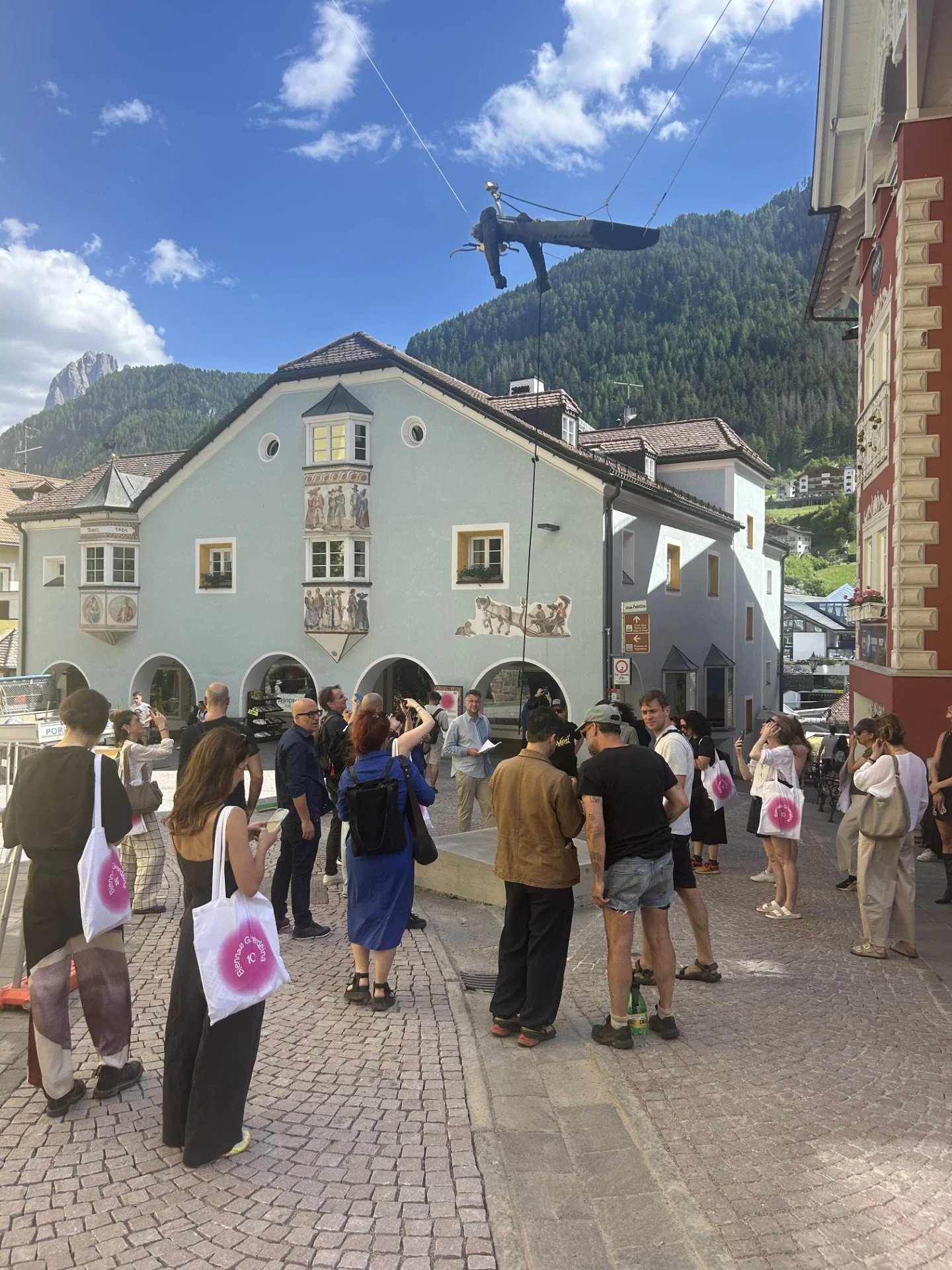
Of all the biennales – and there are many – I would argue that Biennale Gherdëina, staged in the mighty Dolomites with its snow-capped peaks and cragged rocks, is unique. Many of the 27 artworks are situated in and around Ortisei, a blindingly picturesque mountain town with colourful, freshly painted houses, decorative balconies, and handmade wooden sculptures adorning almost every private garden. The garden is also the main theme of the 10th edition, (Future) Paradise Gardens.
Given its spectacular setting in the Unesco-listed Val Gardena, many of the previous biennales have engaged with themes of ecology, but the concept of the garden adds an interesting layer of complexity. The garden borrows from nature, but it is also cultivated and human-made. In the garden – physical and symbolical – opposing states coexist: enclosure/invasion; seduction/expulsion. In her book Orwell’s Roses (2021), Rebecca Solnit wrote: “Gardens are one way that culture does nature.” The curator, Samuel Leuenberger, emphasises the garden not as a completed world, but as a site of transformation. “The future paradise garden is not located at the end of the story, nor behind the walls of a reclaimed Eden,” he writes in his introduction. “It begins wherever we accept that life is divided, that control is only partially possible, that growth is relational, and that even in damaged landscapes, something unexpected can still take root.”
Read the full interview here